
Organic vs. Paid Social Media: How They
Work Together to Grow a Business
Introduction
Think about constructing an advanced retail outlet, filling it up with high-quality items, and organizing a grand opening event, but then finding out that your outlet is situated in the middle of a desolate desert. It does not matter whether your inventory looks good or whether your employees are friendly or not, will have to close down your outlet sooner rather than later.
In the digital landscape, your business faces an identical challenge. With over 4.9 billion active users scrolling across platforms like Instagram, LinkedIn, TikTok, and Facebook, standing out requires a deliberate, strategic traffic plan. When it comes to building an online presence that attracts and converts customers, you have two primary distribution engines: organic vs. paid social media.
One approach is based on sweat equity, relationship building, and creative patience. The other one requires a financial investment, target audience criteria, and performance optimization right away.
Unfortunately, many business owners, traditional marketers, and startup founders view these two channels as bitter rivals. They ask questions like, “Should I focus entirely on organic content reach, or should I just throw money at paid ads?”
Considering them as being completely separate approaches is an absolute mistake on the strategy front. In this complete guide, you will be able to get inside the workings of both channels, understand how they function differently, learn about some real-life applications, and learn about the framework needed to grow your business.
Decoding Organic Social Media
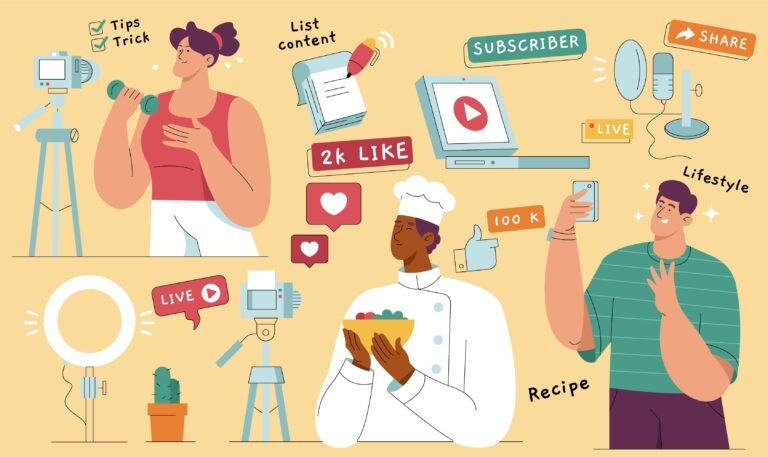
Organic social media is defined as any form of unpaid posts done on various social media platforms. By posting your blog post link, creating behind-the-scenes videos, uploading infographics carousel, and replying to a customer’s post without spending any ad money, you are using organic social media.
The Role of the Organic Funnel :
Social media marketing becomes the virtual pulse and culture that defines your brand. It operates not only as your online storefront but also as your direct PR channel and customer service center all at once. When potential customers find your business through referrals or by searching, the first thing that they usually do is look at your social media profiles.
Primary Objective: Nurturing existing relationships, building brand authority, establishing trust, and fostering brand loyalty over time.
Key Content Types: Educational posts, entertaining short-form videos (Reels/TikTok), user-generated content (UGC), interactive Q&A sessions, and company updates.
The Pros of Organic Social Media:
- No Publishing Costs: To publish content, there are no advertising costs at all involved. Although it takes time and effort to create quality assets, publishing is essentially free.
- True Human Connections: Today’s consumer does not respond to hard-sell messages. Organic content appears more true to life, thus helping brands form real emotional connections with their audience.
- Forever Valuable Asset: Whereas an advertising campaign stops working the minute its budget gets exhausted, an organic content campaign may provide traffic and visibility to a brand forever.
The Cons of Organic Social Media :
- Limitations on Algorithmic Distribution: Social networks are commercial enterprises. In the last ten years, there have been growing restrictions on organic distribution to encourage businesses to pay for advertising space.
- Delayed Reward: Creating a community organically requires months, even years, of consistent postings, community management, and experimentation.
Decoding Paid Social Media
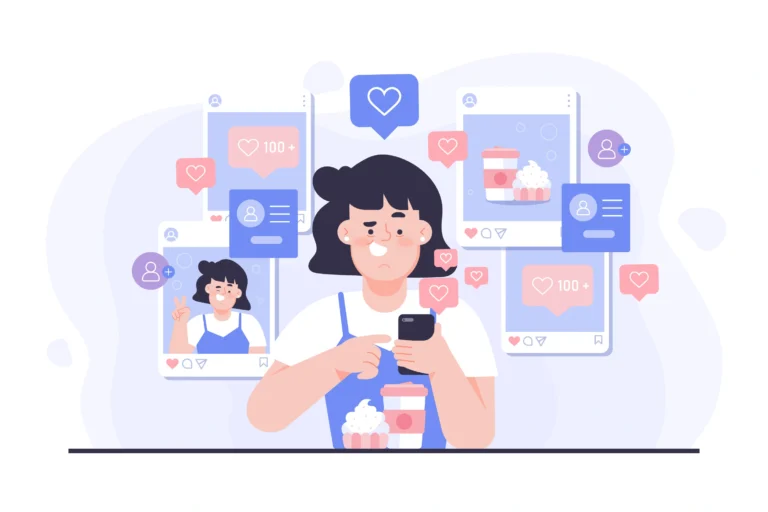
Any content placed by an organization on a social platform in exchange for money to reach a target audience other than its followers is called paid social media. Such content will have signs like “Sponsored,” “Promoted,” or “Ad.”
The Role of the Paid Funnel :
While organic social media is a marathon, paid social media is a sprint. With paid advertising, you can go beyond the restrictions of organic distribution and get your messaging to audiences that fit certain criteria.
- Primary Objective: Fast lead generation, increased sales for e-commerce, customer acquisition, and scaling direct response campaigns.
- Primary Ad Formats: Meta Dynamic Product Ads, LinkedIn Sponsored InMail, TikTok Spark Ads, and YouTube Pre-Roll Video Ads.
The Pros of Paid Social Media:
- Scalability: With a predictably consistent ROAS from your paid campaign (say, for example, generating three times more revenues per dollar spent), there will be no problem scaling up your ad spend.
- Precision Targeting: You can target users based on their demographics, specific interests, purchase histories, job titles, and even profiles similar to your existing customers.
- Speed: Your content will be live as soon as your ad campaign clears the platform’s review process.
The Cons of Paid Social Media :
Direct Financial Risk: Unclear target parameters, weak ad creative, or broken landing-page conversion paths can quickly consume an ad budget without yielding a return.
Zero Compound Residual Value: Paid advertising relies on continuous financial investment. The moment you pause your campaign spend, traffic drops to zero immediately.
Organic vs. Paid Social Media:
To evaluate how these channels complement each other, let us contrast their core characteristics:
| Feature | Organic Social Media | Paid Social Media |
| Core Focus | Nurturing community, building trust, and brand equity. | Driving immediate sales, leads, traffic, conversions. |
| Speed to Results | Long-term (Months to years). | Immediate (Hours to days). |
| Targeting Control | Broad; reliant on follower base and algorithms. | Micro-targeted; based on demographics, intent, behaviors. |
| Cost Structure | High time investment; $0 direct publishing fee. | Continuous financial budget required for distribution. |
| Audience Mindset | Expects entertainment, education, connection. | High-intent evaluation of offers, products, solutions. |
| Longevity | Evergreen; content stays discoverable permanently. | Ephemeral; visibility stops when budget stops. |
Why Organic Reach Has Changed
To appreciate why a hybrid approach is needed in today’s day and age, you need to analyze the evolution of the economics of organic reach.
At the beginning of social media platforms, organic reach was close to being a linear function: a page that had 10,000 followers would mean that a published post would be seen by about 10,000 people in their chronological feeds.
However, with today’s platforms running on an algorithm-based feed system, even high-quality posts can easily get hidden in oversaturated feeds, understanding why great content fails is key to building a distribution strategy that actually gets seen. Industry benchmark data tells us just how different the situation is today:
Average Facebook Page Organic Reach over Time:
[2012] ████████████████ 16%
[2016] ██████ 6%
[2020] ███ 3.2%
[2026] █ ~1.5% to 2%
Because organic reach for business pages frequently sits between 1% and 3%, relying solely on organic posts to broadcast critical product launches means the vast majority of your existing audience will never see your message.
The Hybrid Strategy: How to Combine Organic and Paid
The strength of digital marketing is in using both paid and organic channels in tandem with each other. High-growth companies do not operate each channel separately; rather, they treat their organic channels as the R&D lab and paid channels as the amplification channel.
Strategy 1: The Organic-to-Paid Creative Pipeline
Don’t make assumptions about which creative ideas, headlines, or video teasers would perform best in a paid advertising campaign. Analyze your organic account performance every month.
Identify “outliers” – posts that garnered an above-average amount of saves, comments, or watch time. These pieces of content have already been tested successfully and shown to resonate with your audience organically; thus, they can be used as great candidates for paid promotion and boosted exposure to an even wider targeted audience.
Strategy 2: Intent-Based Retargeting Loops
Generating new leads usually requires several brand touchpoints. An unqualified lead is unlikely to buy a product after seeing one promotional post.
The way to connect with such users is to develop paid retargeting loops based on your organic engagement metrics:
Top of Funnel (Organic): Produce and publish value-driven educational videos that discuss industry problems.
Middle of Funnel (Paid Retargeting): Create a custom audience list in your advertising platform comprised of users who viewed at least 50% of the organic educational videos within 60 days.
Funnel Bottom (Paid Offer): Provide this target audience with customer testimonials, case studies, or special discounts to motivate conversion.
Strategy 3: Digital Storefront Authentication
Once prospects come across a paid ad, many of them will visit the primary social media profile of the advertising account to authenticate its genuineness prior to making a purchase.
If the profile does not have any recent updates, complaints from customers are not addressed, or there are broken links, prospects are likely to leave the transaction. A regular and professional content posting schedule on social media helps to make sure that your account is acting as a reliable digital storefront.
5 Critical Pitfalls to Avoid
- Organic Channels as Only an Ad Space: Posting only sales flyers and promotions via your organic channels will cause followers to dislike and disengage with your content.
- Paid Campaigns Without Proper Installation of Tracking Tools: Launching paid campaigns without installing the necessary tracking tools on the respective platforms, such as the Meta Pixel or Conversions API, will hinder your ability to track your sales and optimize your spending.
- Social Customer Service Absence: Launching paid campaigns but not moderating comments underneath them will cause important questions to go unanswered while creating a potential PR disaster for your brand in front of the target audience.
- Abandoning Your Organic Strategy Because You Run Ads: Ignoring your organic strategy because you think that paid ads will replace it is a costly mistake. Conversion rates of paid ads grow when they are supported by active and engaged organic communities.
- Comparing Performance of Various Channels Based on the Same Metrics: Do not measure the success of organic content based on ROI metrics typical of paid campaigns, and vice versa. Compare the performance of various channels concerning their own strategic functions.